South Hyderabad: The Future of Residential Growth
For many years, Hyderabad's residential expansion was strongly concentrated around the western part of the city.Locations such as Gachibowli, the Financial District, Kokapet and Tellapur developed rapidly alongside the city's technology and commercial sectors, eventually becoming well-established residential and business destinations
About South Hyderabad: The Future of Residential Growth
South Hyderabad: The Future of Residential Growth
For many years, Hyderabad's residential expansion was strongly concentrated around the western part of the city. Locations such as Gachibowli, the Financial District, Kokapet and Tellapur developed rapidly alongside the city's technology and commercial sectors, eventually becoming well-established residential and business destinations.
That pattern of growth, however, is beginning to broaden.
Areas including Rajendra Nagar, Budwel, Shamshabad, Mamidipally, Adibatla and Maheshwaram are seeing a combination of infrastructure development, economic activity and new residential projects. As these factors begin to intersect, South Hyderabad is gradually gaining importance within the city's larger urban expansion story.
The bigger question now is whether this emerging activity can provide the foundation for South Hyderabad to develop into one of Hyderabad's major residential corridors.
How South Hyderabad Is Moving Beyond Its Peripheral Identity
Residential corridors typically mature through the interaction of several factors rather than a single catalyst. Employment opportunities, transportation, social infrastructure and housing supply need to develop alongside one another for sustained residential demand to emerge.
South Hyderabad is increasingly showing elements of this development cycle.
The region already has the advantage of the Outer Ring Road and direct proximity to Rajiv Gandhi International Airport. At the same time, economic activity around the airport and across the southern industrial and employment corridors is expanding the area's economic base.
Residential development is responding to these changes. More housing projects are emerging across South Hyderabad, while buyer interest in the region is also increasing. Although West Hyderabad remains the city's dominant residential market, the growing volume of development in the south indicates that the region is becoming increasingly relevant to Hyderabad's housing landscape.
South Hyderabad is still some distance from the maturity of established western locations. Nevertheless, its changing development pattern suggests that the southern corridor is moving beyond its earlier role as a peripheral market.
The Airport's Role in South Hyderabad's Growth
Rajiv Gandhi International Airport is one of the most significant economic anchors influencing South Hyderabad.
Its impact extends beyond air passenger movement. Aviation-related businesses, logistics, hospitality, commercial services and other supporting activities contribute to an expanding economic ecosystem around the airport.
As this ecosystem grows, it can generate demand for supporting infrastructure, services and housing in surrounding areas. This gives the airport significance from a residential perspective as well.
For homebuyers, its importance is therefore not simply that it provides convenient access to air travel. The airport forms part of a broader economic network that can influence business activity, employment and the development of nearby urban communities.
Over the longer term, this economic ecosystem can play an important role in shaping South Hyderabad's residential potential.
Aerospace, Defence and Manufacturing Add New Economic Drivers
Another important feature of South Hyderabad's development is the diversification of its employment ecosystem.
Adibatla has emerged as a notable aerospace destination in Telangana, while Maheshwaram is attracting activity in defence and advanced manufacturing.
One example is JSW Defence's next-generation unmanned aerial systems facility at EMC Maheshwaram. Construction began in December 2025, with production expected to commence in the fourth quarter of 2026. The facility represents an investment of approximately US$90 million and is being developed in partnership with Shield AI.
Such investments are significant because they introduce economic drivers beyond Hyderabad's traditional IT-led growth model.
The expansion of aerospace, defence and advanced manufacturing can create stronger links between employment centres and nearby residential markets. As these industries develop, surrounding areas could increasingly benefit from the demand generated by their workforce and supporting businesses.
Connectivity Could Become a Major Growth Catalyst
Transportation infrastructure remains one of the important factors to consider when assessing an emerging residential corridor.
South Hyderabad already benefits from established road connectivity through the Outer Ring Road and routes connecting the region with the airport and other southern development zones.
Future public transportation could add another layer of accessibility.
Hyderabad Metro Rail's Phase II proposal includes a 36.8-km Nagole–Shamshabad RGIA corridor. Another Phase II(B) proposal covers a 39.6-km connection between RGIA and Bharat Future City.
These are proposed projects and not currently operational metro routes. For homebuyers and investors, that distinction matters. Existing infrastructure should be evaluated based on what is available today, while proposed infrastructure should be considered as a potential future advantage rather than a guaranteed current benefit.
Bharat Future City and the Larger Urban Expansion Story
The proposed Bharat Future City provides another long-term dimension to South Hyderabad's development.
The Future City Area Development Authority covers 56 revenue villages across 765.28 sq km, based on the Telangana government's notification. Government planning envisions Bharat Future City as a large-scale, multi-sector urban development incorporating areas such as technology, education, industry, economic activity and planned urban infrastructure.
Projects of this scale are unlikely to transform a region overnight. Their significance lies instead in the long-term direction they establish for Hyderabad's urban expansion.
For South Hyderabad, Future City therefore represents a potential structural shift in how the southern part of the metropolitan region develops over the coming years.
A Wider Range of Residential Communities Is Emerging
The changing economic and infrastructure environment is also influencing the residential profile of South Hyderabad.
The region is seeing residential projects designed for different household requirements, from large integrated communities to more focused apartment and villa developments.
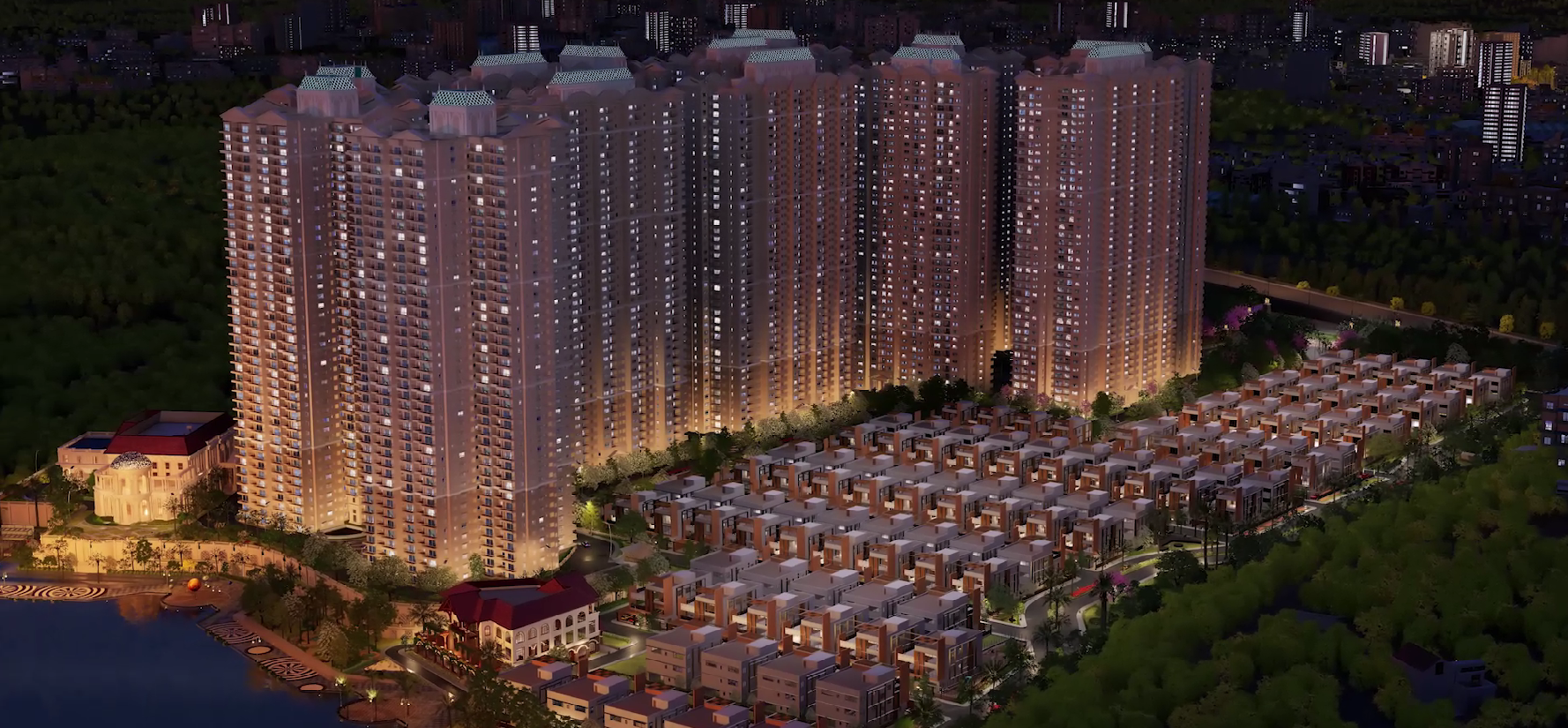
Vaishnaoi Group and Prestige Group have collaborated on The Prestige City Hyderabad in Rajendra Nagar. The development covers 64 acres and comprises 4,647 apartments across 13 towers, creating a large-scale residential community aimed at contemporary urban households.
The broader development also includes Bellagio @ The Prestige City Hyderabad, a 24-acre villa community comprising 119 five-bedroom villas. The combination of apartments and villas within the larger development reflects the increasingly varied housing preferences emerging across South Hyderabad.
At a different scale, Vaishnaoi Group's Garuda in Mamidipally, Shamshabad, offers 2 and 3 BHK apartments, catering to another segment of the region's residential demand.
Developments such as Southwoods further contribute to this changing residential landscape, demonstrating how the southern corridor is creating opportunities for different models of community living.
The significance of these developments is not simply the number of homes being added. Their diversity indicates that South Hyderabad's residential market is beginning to accommodate different lifestyles, budgets and preferences.
South Hyderabad Has a Different Growth Story From the West
The emergence of South Hyderabad should not be interpreted as a challenge to the established residential markets of Gachibowli, the Financial District or Kokapet.
West Hyderabad has the advantage of an established technology and employment ecosystem, mature social infrastructure and strong residential demand. South Hyderabad, by comparison, is still developing its identity and economic base.
Its growth is being influenced by a different set of factors: airport-led economic activity, aerospace and defence investments, planned infrastructure, Future City and the availability of larger parcels of land for new residential development.
Rather than becoming another version of West Hyderabad, the southern corridor could develop its own distinct economic and residential character.
What Homebuyers Should Look At
For anyone evaluating property in South Hyderabad, focusing solely on today's price or project availability may not provide the complete picture.
Buyers should assess factors such as:
- Existing and planned connectivity
- Access to employment centres
- Availability of schools, healthcare and other social infrastructure
- Developer track record and credibility
- Project scale and planning
- Existing neighbourhood development
- The actual status of proposed infrastructure
- Long-term potential of the surrounding economic ecosystem
Emerging markets require a slightly different evaluation approach from mature residential destinations. Buyers need to distinguish between infrastructure and amenities that already exist and developments that remain proposed or under construction.
South Hyderabad's Residential Story Is Still Unfolding
South Hyderabad is not yet comparable with the established residential ecosystem of West Hyderabad. But its development trajectory is becoming increasingly difficult to overlook.
Airport-driven economic activity, aerospace and defence investments, improving connectivity, proposed metro infrastructure, Bharat Future City and an expanding range of residential communities are contributing to a broader transformation of the southern corridor.
The region's future will depend on how effectively these individual developments come together over time.
If employment, infrastructure, urban planning and residential development continue to reinforce one another, South Hyderabad could gradually transition from an emerging residential option into one of Hyderabad's most important growth corridors.
For homebuyers, that makes the southern side of the city a region worth watching, not simply for what it offers today, but for the larger urban ecosystem it could become.
Frequently Asked Questions
1. Why is South Hyderabad becoming a major residential growth corridor?
South Hyderabad is gaining importance due to airport-led economic activity, improving connectivity, aerospace and defence investments, Bharat Future City and the emergence of new residential developments.
2. Which areas are seeing residential growth in South Hyderabad?
Rajendra Nagar, Budwel, Shamshabad, Mamidipally, Adibatla and Maheshwaram are among the areas experiencing increasing infrastructure, economic and residential development.
3. How is Hyderabad Airport driving residential growth in South Hyderabad?
Rajiv Gandhi International Airport supports aviation, logistics, hospitality and commercial activities, creating an expanding economic ecosystem that can contribute to employment and housing demand in surrounding areas.
4. How will Bharat Future City impact South Hyderabad's development?
Bharat Future City represents a long-term urban development direction for the southern region, with planned growth across technology, education, industry, economic activity and urban infrastructure.
5. Will the Hyderabad Metro improve connectivity to South Hyderabad?
Proposed Hyderabad Metro Phase II corridors include connections between Nagole and Shamshabad RGIA and between RGIA and Bharat Future City. These projects are proposed and are not currently operational.
6. What should homebuyers consider when buying property in South Hyderabad?
Homebuyers should evaluate existing and planned connectivity, employment centres, social infrastructure, developer credibility, project planning, neighbourhood development and the actual status of proposed infrastructure.